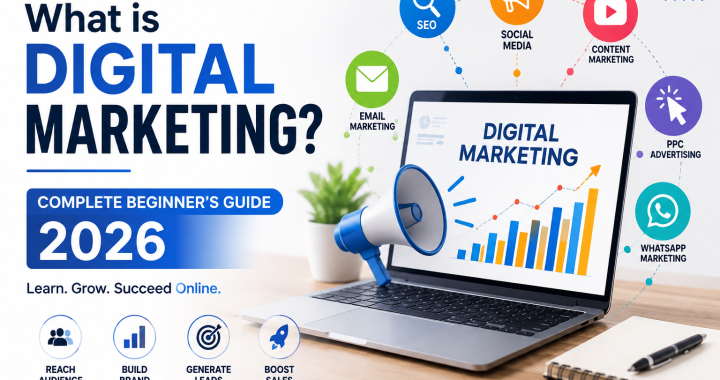
Meta Description: Learn digital marketing 2026 with this beginner-friendly guide covering SEO, social media, PPC, email marketing, tools, and more.
The way people find businesses has changed a lot. Today, customers search on Google, watch videos, check Instagram, read reviews, and compare products online before making a decision. That is why having an online presence is no longer optional for businesses.
Whether you run a small shop, a startup, a service business, or a large company, digital marketing can help you reach the right people at the right time. The best part is that you do not always need a huge budget to get started.
In this complete guide, we will explain digital marketing for beginners in simple language. You will learn what digital marketing is, its different types, benefits, useful tools, how to get started, and what you can expect from digital marketing 2026.
What is Digital Marketing?
Digital marketing means promoting a business, product, or service using the internet and digital channels. Instead of depending only on newspapers, banners, pamphlets, or TV ads, businesses can connect with customers through websites, search engines, social media, email, mobile phones, and online advertising.
For example, if you search Google for “best digital marketing agency near me” and visit a company’s website, that business is using digital marketing to attract potential customers.
In simple words, digital marketing is the process of reaching and engaging customers through online platforms.
It can help businesses:
- Build brand awareness
- Find new customers
- Generate leads
- Increase website traffic
- Sell products and services
- Build relationships with customers
- Measure marketing results
One major advantage of digital marketing is that businesses can track their results. You can see how many people visited your website, clicked an advertisement, watched a video, or contacted your business.
Types of Digital Marketing
There are many areas of online marketing. Let’s understand the most common types.
1. Search Engine Optimization (SEO)
SEO helps your website appear higher in search engine results such as Google.
For example, if you own a bakery in Delhi, you may want your website to appear when someone searches for “best bakery in Delhi.” SEO uses useful content, keywords, website improvements, links, and other methods to improve visibility.
SEO is especially useful for businesses that want long-term organic traffic.
2. Social Media Marketing
Social media marketing means promoting your business through platforms such as Instagram, Facebook, LinkedIn, and YouTube.
Businesses can use social media to:
- Share useful content
- Promote products
- Connect with customers
- Build a community
- Increase brand awareness
- Generate leads
For Indian businesses, social media can be a great way to reach both local and nationwide audiences.
3. Search Engine Marketing and PPC
Search Engine Marketing (SEM) includes paid advertising on search engines. Pay-Per-Click (PPC) advertising allows businesses to show ads when people search for specific keywords.
For example, a web development company can run Google Ads for searches such as “website development company in India.”
The business generally pays when someone clicks on the advertisement.
4. Content Marketing
Content marketing focuses on creating helpful and valuable content for your audience.
This can include:
- Blog posts
- Videos
- Infographics
- Guides
- Social media posts
- Case studies
Good content can answer customer questions and help build trust before someone decides to buy.
5. Email Marketing
Email marketing allows businesses to communicate directly with customers through email.
Companies can use emails to share offers, newsletters, new products, updates, educational content, and special deals.
It can be a cost-effective way to stay connected with existing customers.
6. WhatsApp and Mobile Marketing
WhatsApp is widely used in India, making it an important communication channel for many businesses.
Businesses can use WhatsApp to answer questions, share product information, send updates, provide customer support, and follow up with leads.
Mobile marketing can also include SMS, mobile apps, and other mobile-focused campaigns.
Benefits of Digital Marketing
Why should a business invest in online marketing? Here are some important benefits.
Reach More Customers
The internet allows businesses to reach people beyond their local area. A small business in India can potentially attract customers from different cities and even other countries.
Cost-Effective Marketing
Traditional advertising can be expensive. Digital campaigns can often be started with a smaller budget, making them useful for startups and small businesses.
Target the Right Audience
Online advertising platforms allow businesses to target people based on factors such as location, interests, age, and online behavior.
This means your marketing budget can be focused on people who are more likely to be interested in your products or services.
Easy to Measure Results
Digital marketing provides useful data. You can track impressions, clicks, website visits, leads, conversions, and other results.
This helps you understand what is working and where you need to improve.
Build Customer Trust
Regularly sharing helpful content, answering questions, responding to reviews, and staying active online can help a business build credibility and trust.
Real-Life Example: A Small Indian Business
Imagine a small homemade cake business in Lucknow.
The owner starts an Instagram page and posts attractive photos and short videos of cakes. They also create a Google Business Profile so local customers can find the shop when searching for cakes nearby.
The owner then runs a small Instagram advertising campaign targeting people in the local area. Customers can contact the business through WhatsApp to ask about prices and place orders.
The business also asks happy customers to leave reviews online.
This is a simple example of digital marketing for beginners. The business does not need a huge marketing team. By using social media, local search, online reviews, and WhatsApp, it can attract more nearby customers.
Digital Marketing Tools
You do not need hundreds of tools to begin. Start with a few useful ones.
Google Analytics
Google Analytics can help you understand how people interact with your website, including where visitors come from and what they do on your site.
Google Search Console
Google Search Console helps website owners monitor their performance in Google Search and identify certain website or search-related issues.
Canva
Canva is useful for creating social media posts, banners, presentations, and other visual content without needing advanced design skills.
Google Ads
Google Ads can be used to create paid advertising campaigns and reach people searching for products and services.
Social Media Platforms
Instagram, Facebook, LinkedIn, and YouTube can be used to build an audience, share content, and promote a business.
How to Start Digital Marketing
If you are completely new, don’t try to learn everything at once.
Step 1: Understand Your Audience
First, identify who your customers are. Think about their needs, problems, location, interests, and buying habits.
Step 2: Choose Your Platform
You do not need to be everywhere. Choose platforms where your target customers are active.
For example, a B2B company may focus more on LinkedIn, while a fashion business may get better results from Instagram.
Step 3: Create Useful Content
Start creating simple content that helps your audience. Answer common questions, share tips, demonstrate your products, and explain how your service solves problems.
Step 4: Learn SEO Basics
Learn how keywords work, how to create useful website content, and how to make your website easy for both users and search engines to understand.
Step 5: Try Paid Advertising
Once you understand the basics, you can test a small paid campaign. Start with a limited budget and track the results.
Step 6: Measure and Improve
Check your results regularly. Find out which content, ads, or platforms bring the most visitors, leads, or sales.
Remember, digital marketing is not about getting instant results. It is about testing, learning, and improving.
Future of Digital Marketing in 2026
The world of online marketing continues to change quickly. Digital marketing 2026 is expected to focus even more on useful content, personalization, mobile experiences, video, automation, and artificial intelligence.
AI tools are already helping marketers with tasks such as content ideas, customer research, data analysis, and campaign planning. However, businesses still need human creativity and a clear understanding of their customers.
Short-form video will remain important because people enjoy quick and easy-to-consume content. Businesses can use videos to demonstrate products, answer questions, share customer stories, and show behind-the-scenes content.
Voice search, local SEO, WhatsApp marketing, and personalized customer experiences are also areas businesses should pay attention to.
For beginners, the key is not to chase every new trend. Instead, focus on understanding your audience and creating useful experiences for them.
Conclusion
Digital marketing has become an important part of growing a business in today’s online world. From SEO and social media to PPC, email, content, and WhatsApp marketing, businesses have many ways to connect with potential customers.
The good news is that you don’t need to be an expert to start. Digital marketing for beginners can be learned step by step. Start with one platform, understand your audience, create useful content, track your results, and improve over time.
As we move further into digital marketing 2026, businesses that focus on helpful content, customer trust, mobile users, and smart use of technology can create stronger online connections.
Whether you are a student, freelancer, entrepreneur, or business owner, learning digital marketing can be a valuable skill for the future.
Want to learn digital marketing? Comment below and share what you want to learn next!
If you want, I can also turn this into a more SEO-focused version with keyword placement, slug, title tag, H1, FAQs, and internal-link suggestions for your website.